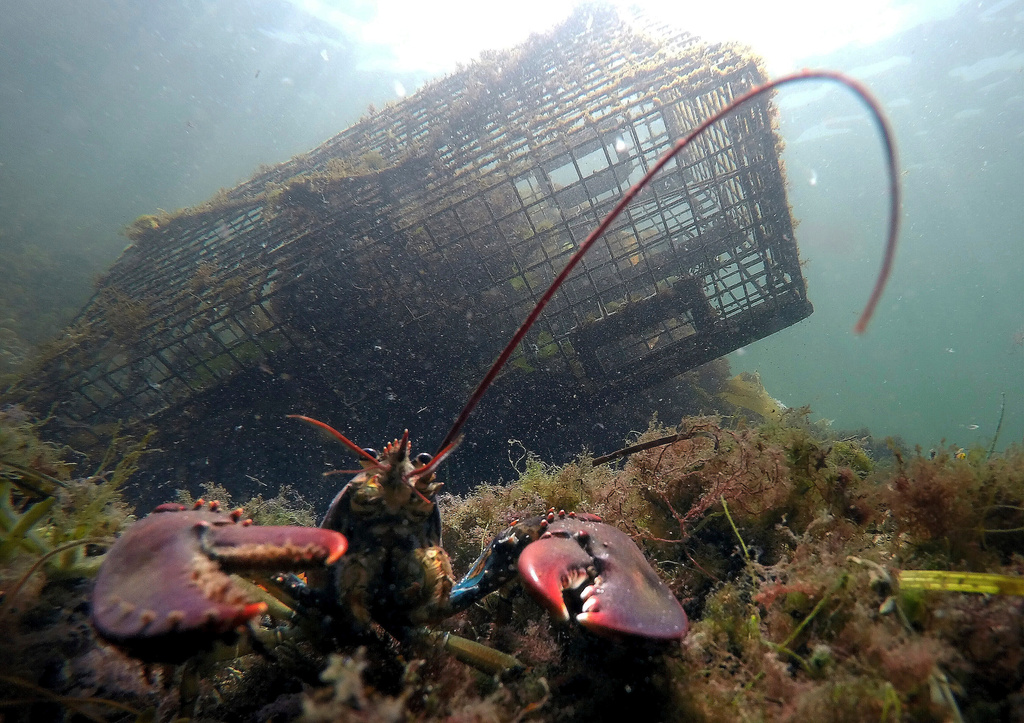
The future of Maine’s multi-million-dollar lobster industry could all depend on tiny creatures that aren’t even an inch long.
Researchers found that a species of microscopic zooplankton (Calanus Finmarchicus) is the primary source of food for thousands of lobster larvae, and are in turn, the unseen fuel for the industry.
However, researchers say that these plankton prefer cooler waters and might start heading up north due to the warming waters of the Gulf of Maine. And with a high mortality rate among lobsters in larval form, removal of their primary source of food could become a major problem.
“1 and 10 thousand larvae make it from the surface of the ocean down to the bottom” Alex Ascher, lead researcher at the Quahog Bag Conservancy in Harpswell told CBS 13. “So, when you have mortality that is that high, it has a lot of impact on the overall population dynamics of the organism”.
Lobsters usually take 5-7 years to reach maturity.
Ascher added that declines in lobster larvae in certain parts of the gulf correlated to similar declines in the amount of the plankton.
He also stated that he doesn’t believe the research confirms that Maine will see fewer lobsters in future years, but it may help researchers predict future populations.
To read the original CBS 13 article, click here.