AUGUSTA, Maine (AP) — The commanding officer of an Army reservist responsible for the deadliest shooting in Maine history acknowledged to an independent commission on Thursday that he didn’t take action when the reservist skipped counselor sessions, and didn’t attempt to verify that the shooter’s family took away his guns.
Capt. Jeremy Reamer said he understood that the shooter, Robert Card, was suffering from a psychiatric breakdown during training last summer but said he was limited in the level of oversight he could provide after Card returned home and was no longer actively participating in drills with his Army Reserve unit.
Under questioning, Reamer said he was aware that Card was not going to mandated counseling sessions and acknowledged that an email problem prevented him from seeing a July message pertaining to Card’s health until after the Oct. 25 shootings.
But Reamer defended his decision to rely on a subordinate, an Army reservist who was Card’s best friend, to serve as a go-between with Card’s family. The reservist, Sean Hodgson, told Reamer that he reached out to Card’s family in Bowdoin and that family members agreed to take away his guns after he was hospitalized. Reamer said he thought those actions were adequate, and insisted that as an Army Reserve officer, he had no jurisdiction over Card’s personal guns.
“My understanding was that an agreement was made and the family agreed to remove the weapons from the home,” Reamer told Commissioner Toby Dilworth, who expressed skepticism about leaving such an important task for the family to handle. “I just know that the family agreed to remove the firearms,” Reamer said.
Reamer, who gave up control of the Maine-based unit after what he described as a routine change of command in February, was called back to testify after his previous testimony was cut short because of time constraints.
Commissioners used the break to review medical records, text exchanges, emails and call logs before peppering Reamer with more questions over several hours Thursday at the University of Maine at Augusta. At one point, Reamer suggested that more aggressive actions and oversight would have been possible if Card had been a full-time soldier instead of a reservist.
Others testifying Thursday included several survivors who spoke of the horror of the shooting and the difficulties they encountered afterward. Some witnesses said a lack of translators fluent in American Sign Language hampered communications with deaf survivors and deaf family members of victims.
Dr. Mark Flomenbaum, the state’s retired chief medical examiner, said it was difficult to ascertain the gunman’s time of death. But Flomenbaum, who testified via Zoom, stood by his earlier assessment that Card died from a self-inflicted gunshot wound that likely happened 12 to 18 hours before his body was found.
Flomenbaum’s conclusions suggested that Card was alive and possibly on the run during much of the two-day search, the biggest in state history. Card’s body was found in the back of a tractor-trailer on a former employer’s property.
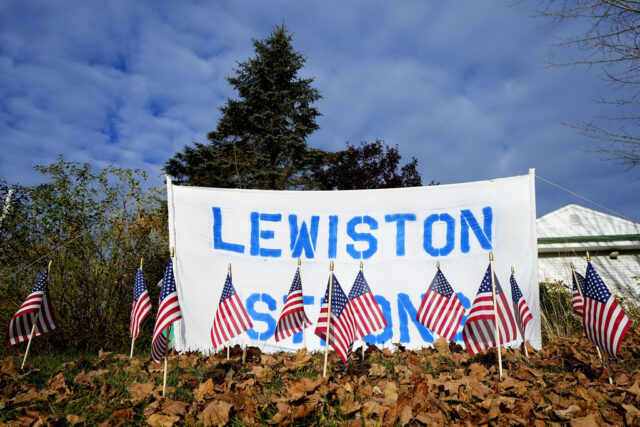
Appointed by Democratic Gov. Janet Mills, the independent commission is determining facts around the shooting that claimed 18 lives at a bowling alley and at a bar and grill, both in Lewiston.
In its interim report released last month, the commission concluded that the Sagadahoc County sheriff’s office had probable cause under Maine’s “yellow flag” law to take Card into custody and seize his guns because he was experiencing a psychiatric crisis and was a danger to others.
Maine lawmakers are currently debating whether the law, which requires police to initiate the process, should be supplemented with a “red flag” law, which would allow family members or others to directly petition a judge to remove guns from someone in a psychiatric crisis. It’s one of several mental health and gun control measures being considered by the Maine Legislature in response to October’s mass shooting.
The commission’s work is far from complete, Chairman Dan Wathen said last month.
“Nothing we do can ever change what happened on that terrible day, but knowing the facts can help provide the answers that the victims, their families and the people of Maine need and deserve,” he said.